
What if I told you that you could travel through Spain, spending your nights in medieval castles, centuries-old monasteries, magnificent palaces, and historic fortresses—without needing to be royalty or having an enormous travel budget? Let me introduce you to the Paradores of Spain.
These extraordinary accommodations are part of a nationwide hotel network created by the Spanish government nearly a century ago?
If you’ve never heard of Paradores of Spain you’re in for a wonderful discovery.
Of all the fascinating places I’ve encountered during my travels, the Paradores remain one of my favorite concepts in tourism. They combine so many things I love about exploring the world: history, architecture, culture, and the opportunity to experience extraordinary places rather than simply visit them.
I’ve had the pleasure of visiting several throughout Spain, and each has been remarkable in its own way.
But first, what exactly is a Parador?
What Are the Paradores of Spain?
The Paradores of Spain are a network of government-owned hotels located throughout Spain, many housed in some of the country’s most historically significant buildings.
Imagine a 10th-century fortress transformed into a hotel. A medieval monastery where you can spend the night. A Renaissance palace where the grand halls and courtyards have welcomed visitors for hundreds of years.
Rather than allowing these remarkable structures to deteriorate or become forgotten relics, Spain has found a way to preserve them while opening their doors to travelers.
Today, the Paradores of Spain network includes historic castles, convents, monasteries, palaces, and manor houses, alongside newer hotels situated in spectacular natural settings.
They aren’t simply places to sleep. They are opportunities to immerse yourself in the living history of Spain.
And what makes the concept especially appealing is that you don’t have to be an extraordinarily wealthy traveler to experience them. While some properties are luxurious and command premium prices, others can be surprisingly accessible, particularly outside the peak tourist season.
A Brilliant Idea Born Nearly 100 Years Ago
The history of Spain’s Paradores began in the early 20th century, when the Spanish government recognized an opportunity to encourage tourism in lesser-visited regions of the country.
In 1928, King Alfonso XIII inaugurated the first Parador in the Sierra de Gredos mountains, west of Madrid.
The original idea was to provide quality accommodations in beautiful locations where tourist infrastructure was limited.
Over time, the project evolved to include the restoration and preservation of historically significant buildings.
Castles, palaces, monasteries, and other architectural treasures were given new life as hotels, allowing visitors to experience some of Spain’s extraordinary cultural heritage from the inside.
It’s an approach to tourism that I wish more countries would embrace.
Rather than separating history from everyday life, the Paradores of Spain allow these buildings to continue serving a purpose while preserving their remarkable stories.
Imagine Sleeping in a Medieval Castle
One of the most magical aspects of staying at a historic Parador is the experience of inhabiting a building that has witnessed centuries of history.
You might walk through a stone archway that soldiers once guarded, climb a staircase worn smooth by generations of footsteps, or sit in a courtyard where nobles and royalty once gathered.
Some buildings retain their imposing defensive towers and battlements. Others feature beautiful cloisters, elaborate gardens, or magnificent views of the surrounding countryside.
Of course, they’ve been adapted to accommodate modern travelers. You can expect comfortable rooms, contemporary bathrooms, and many of the amenities of a traditional hotel.
But the atmosphere is something entirely different.
A modern luxury hotel might impress you with its design. A historic Parador impresses you with the simple realization that the walls around you have been standing for hundreds of years.
And for someone who loves history as much as I do, that experience is priceless.
Four Extraordinary Paradores I’ve Visited
I’ve had the opportunity to explore several of Spain’s historic Paradores, from the dramatic cliffs of Andalusia to a medieval fortress overlooking the French border.
Here are three that left an impression on me.
Parador de Ronda: Perched Above an Extraordinary Gorge
Ronda, in southern Spain’s Andalusia region, is one of those places that almost doesn’t seem real.
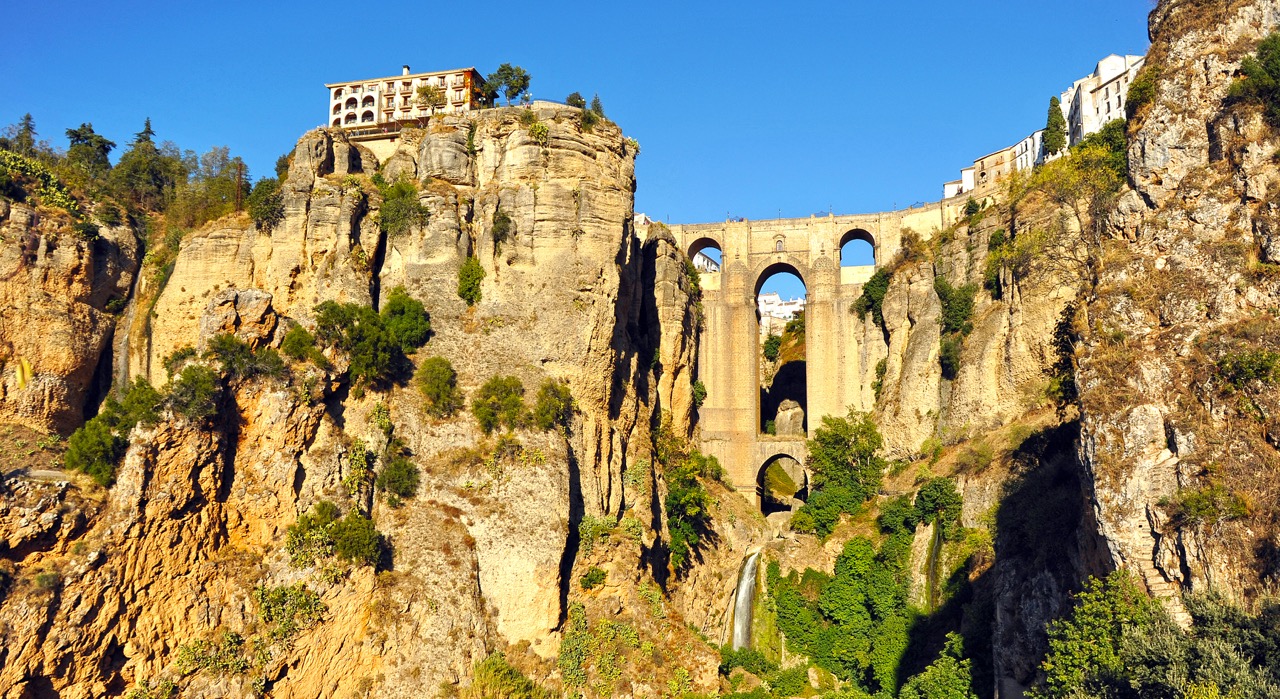
The historic town sits atop enormous cliffs, divided by a deep gorge and connected by the spectacular Puente Nuevo, an 18th-century stone bridge.
Perched right beside the bridge is the Parador de Ronda, housed in the town’s former city hall.
Unlike some Paradores, this one isn’t a medieval castle. Its magic comes from its extraordinary setting.
The hotel overlooks El Tajo gorge, with breathtaking views of the cliffs and surrounding Andalusian countryside.
Ronda itself is worth exploring, with its winding streets, historic architecture, and dramatic mountain landscapes. But the opportunity to stay in such an extraordinary location makes the experience even more memorable.
Parador de Hondarribia: A Fortress on the French Border
In northern Spain’s Basque Country, just across the border from France, stands the magnificent Parador de Hondarribia.
This one really is a castle.
Housed in the historic Castle of Charles V, the Parador occupies a fortress whose origins date back to the 10th century.
Its massive stone walls once served a military purpose, protecting this strategically important settlement near the Bidasoa River.
Over the centuries, the fortress hosted monarchs, including Emperor Charles V.
Today, those same ancient walls welcome travelers.
The building overlooks the river estuary and the French border, while the surrounding medieval town offers narrow cobblestone streets, colorful traditional Basque architecture, and wonderful opportunities to explore the region.
It’s precisely the kind of place that makes the Paradores concept so extraordinary.
You aren’t simply visiting a historic castle. You can actually spend the night inside it.
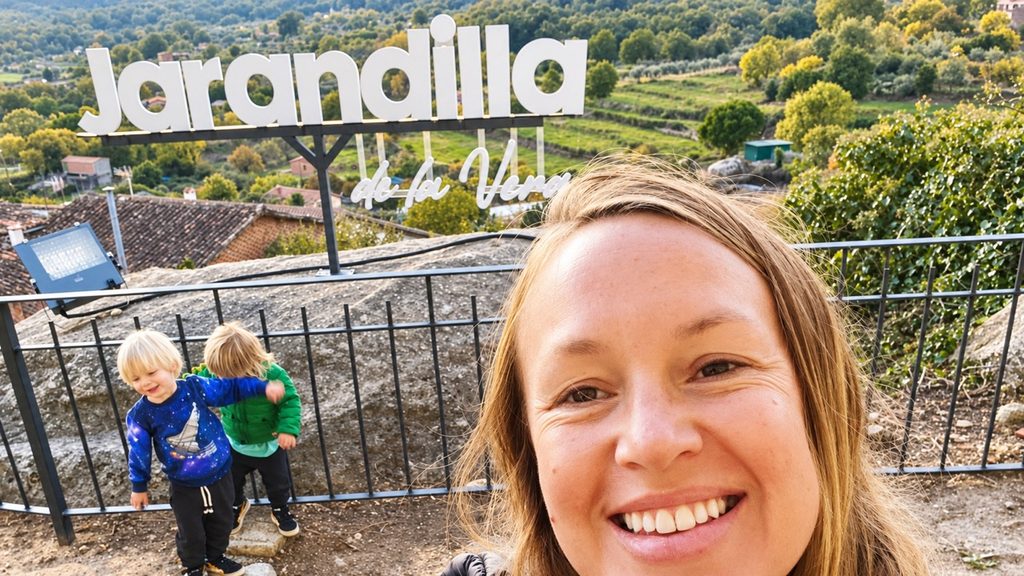
Parador de Jarandilla de la Vera: Where an Emperor Once Lived
Another extraordinary example is the Parador de Jarandilla de la Vera, located in Spain’s Extremadura region.
This beautiful hotel occupies the former castle-palace of the Counts of Oropesa, surrounded by mountains, forests, and picturesque villages.
In 1556, Emperor Charles V came to stay at the castle after abdicating his throne. He remained there for several months while his retirement residence at the nearby Monastery of Yuste was being prepared.
Today, visitors can explore the castle’s historic courtyards, towers, and stone architecture while enjoying the comforts of a modern hotel.
The surrounding La Vera region is beautiful in its own right, known for its natural swimming pools, mountain landscapes, and traditional villages.
And there’s something wonderful about the idea that an ordinary traveler can spend the night in a place that once sheltered one of Europe’s most powerful emperors.
Parador de Jaén: A Castle Above a Sea of Olive Trees
High above the city of Jaén in Andalusia, another extraordinary Parador rises from the rocky summit of Santa Catalina Hill.
The Parador de Jaén sits beside the historic Castle of Santa Catalina, a fortress with roots stretching back to the Moorish period. The hill itself has an even longer history, with evidence of settlement dating back to the Phoenicians.
Over the centuries, this strategic hilltop has witnessed invasions, battles, and the rise and fall of kingdoms. During the Peninsular War, the castle even served as a stronghold for Napoleon’s troops.
Today, the setting is considerably more peaceful.
The Parador’s imposing stone walls, towers, and magnificent vaulted interiors evoke the atmosphere of a medieval fortress. But what makes this place truly unforgettable is its location.
From high above the city, the surrounding landscape unfolds into what seems like an endless sea of olive groves, with the mountains of Sierra Morena and Sierra Mágina rising in the distance.
Jaén is at the heart of one of the world’s great olive oil-producing regions, and the landscape is an extraordinary reminder of how deeply agriculture, history, and culture are intertwined in this part of Spain.
It’s another wonderful example of what makes the Paradores so special. Rather than simply visiting a historic fortress, travelers can spend the night surrounded by centuries of history, waking up to views that stretch across the Andalusian countryside.
And if there’s one thing I’ve learned during my travels, it’s that sometimes the most extraordinary places are the ones you might never have discovered if you hadn’t ventured beyond the familiar tourist routes.
Are Spain’s Paradores Expensive?
You might assume that staying in a historic castle or royal palace would be prohibitively expensive.
But one of the most appealing things about the Paradores is that they aren’t exclusively luxury accommodations for wealthy travelers.
Prices vary considerably depending on the property, season, room category, and demand.
Some historic Paradores are premium hotels, while others offer rates comparable to conventional accommodations in the same region.
I paid only 80€ to stay at Jarandilla and Hondarribia during the off season. Jaen was similarly priced during the high summer months. Rhonda was around 200€ per night.
If your travel dates are flexible, staying during the shoulder season or taking advantage of special promotions can make the experience even more affordable.
For me, the value isn’t simply about the room itself.
It’s the opportunity to experience something that would be difficult to replicate anywhere else.
Can You Visit a Parador Without Staying Overnight?
Yes! Many Paradores have restaurants, cafés, terraces, or other public spaces where non-overnight guests can enjoy the atmosphere, subject to each property’s access rules.
And this is another wonderful way to experience the network.
Imagine stopping for lunch inside an ancient monastery, enjoying a glass of wine in a castle courtyard, or sitting on a terrace overlooking one of Spain’s most spectacular landscapes.
Even if your itinerary or budget doesn’t allow for an overnight stay, it’s worth investigating whether there’s a Parador along your route.
How to Find and Book the Paradores in Spain
The easiest way to discover Spain’s Paradores is through the official Paradores website, where you can browse properties by location, explore photographs, read about their histories, and check accommodation rates.
A few suggestions if you’re planning your own Paradores adventure:
- Look beyond Spain’s major cities. Some of the most fascinating properties are located in smaller towns and rural regions you might otherwise overlook.
- Research the history of each building. Knowing who once lived there or what events unfolded within its walls makes the experience far more meaningful.
- Consider traveling during the shoulder season. Spring and autumn often offer beautiful weather and a more peaceful atmosphere.
- Explore the surrounding towns. Many Paradores are situated in historically rich communities that deserve time to explore.
- Check for special offers. The official website advertises seasonal promotions and benefits through the Amigos de Paradores loyalty program.
- Bring your camera. These buildings offer extraordinary opportunities for architectural, landscape, and travel photography.
A Different Way to Experience Spain
Spain is filled with incredible destinations. Barcelona, Madrid, Seville, Granada, and the country’s magnificent Mediterranean coastline attract millions of visitors.
But beyond these famous places lies another Spain, filled with medieval villages, ancient fortresses, mountain landscapes, and remarkable architectural treasures.
The Paradores offer an incredible way to discover it.
And what I love most about the concept is that these extraordinary buildings aren’t simply being preserved as monuments to the past.
They’re still alive.
People gather in their courtyards, share meals in their dining rooms, wander through their ancient corridors, and fall asleep beneath roofs that have sheltered generations before them.
History becomes something you can experience rather than merely observe.
If you’re planning a trip to Spain, I encourage you to explore the Paradores network before booking your accommodations.
You might discover that one of the most magical parts of your journey isn’t where you go during the day.
It’s where you spend the night.
For more stories, photographs, and extraordinary places I’ve discovered around the world, explore The Magic I’ve Seen.
Photos where I am not pictured were sourced from Adobe Stock. One of these trips took place before I got serious about photography, the next trip happened while traveling with my three very young boys. I gave myself a break from the camera.