
When You Love What You Do
You will suffer any setback, go for broke, and wait for the right opportunity to come your way.
This is where I am now, learning so much about myself and my willingness to make less money to do the things I love, the things that fill my heart.
I am spending a few months in the United States, and when I am here, I feel this chasm of priorities between myself and this culture. This culture is first about making money, second about family, and third about actually enjoying the way you spend your time. All under the guise of, “I am making all this money so that I can sleep in a house I love and afford to spend those precious two days a week doing what I love—and then a precious few weeks, if I am lucky, going to places I love.”
In the past 18 months, since I lost my dream job when Trump cut USAID, I have become keenly aware of just how much I am willing to suffer financially to avoid doing a job I don’t love.
It has been tight.
And I have been unwilling to just get a job.
Instead, I have been trusting that if I just relax, enjoy this extra time with my family, settle in, and surrender, the right opportunity will come my way. I do not have to stress or worry. I will find a way to make ends meet in the meantime.
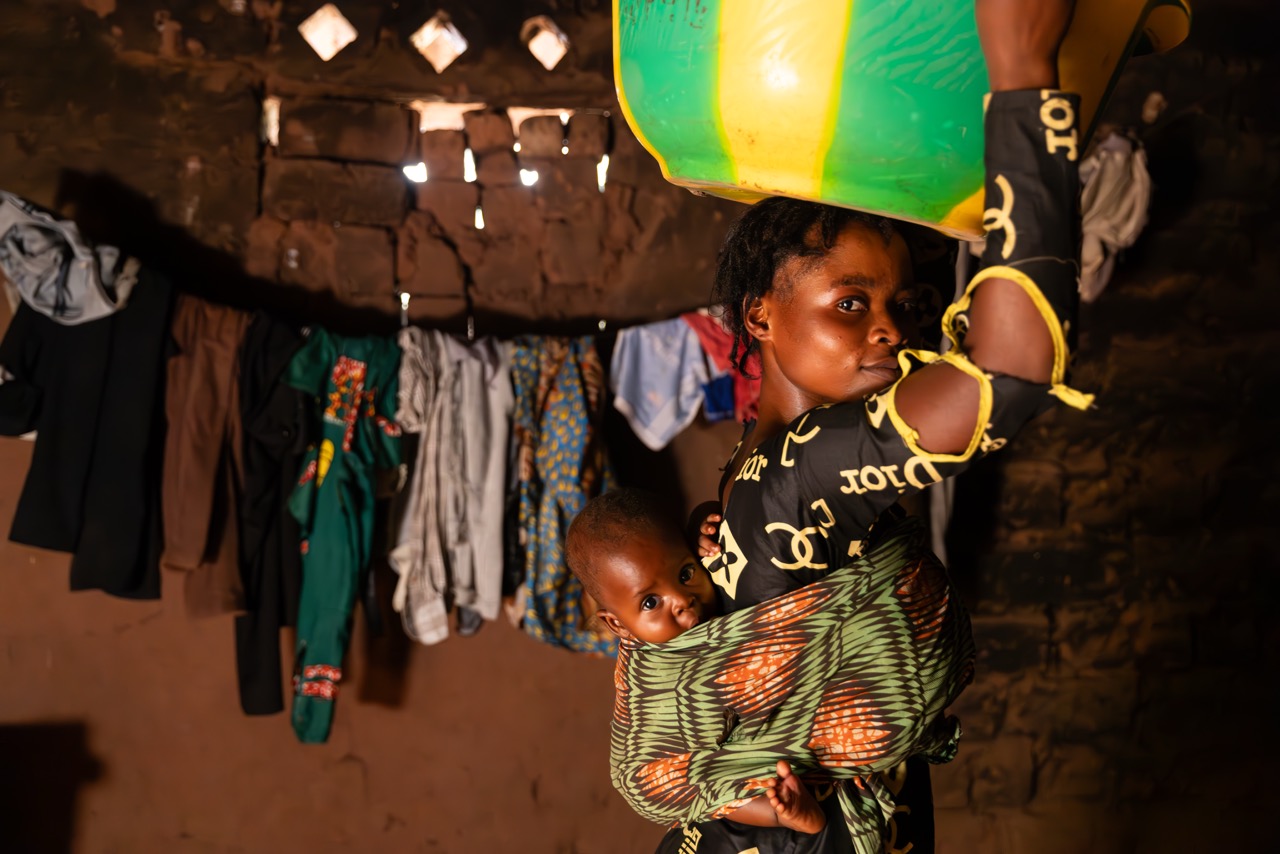
And eventually, I will be back out there with Sophie Nzeba, pictured here, discussing the many ways her son, Misenga, has thrived since being born weighing only three pounds. He was nurtured back to health by our project-trained medical team.
Here is their story…
Three Pounds of Possibility
Six months before this photo was taken in 2024, Sophie’s baby, Misenga Michel, was born at full term but with a low birth weight of only 1.4 kg, or approximately three pounds.
Thankfully, the baby had a will to live. He had an Apgar score of 10 out of 10 and immediately began suckling. They placed him at his mother’s breast, and he fed well.
Therese Keza, a midwife at Kalonda General Reference Hospital, says she was preparing the mother when she heard the baby whimper.
“We understood that we had to protect him. I was next to them with my SDA tablet.”
She goes on to explain:
“I thought, ‘It’s a baby with a low birth weight. What can we do?’ The other nurse was by my side. We opened the tablet and we started to watch the videos. We were shown how to apply the kangaroo method, and we applied it. The baby stopped whimpering when he felt the warmth next to his mom. There, there was more heat, and the child felt better. And then, every day, we were there, monitoring the child and always taking the child’s temperature and weight.”
After one month at the hospital, Michel had reached 2.4 kg. His mother, Sophie, was ready to go home. It is generally recommended to wait until a baby reaches 2.5 kg, which is considered the threshold for normal birth weight, but Michel was strong, and his mother was confident he would be okay.
She left with her healthy baby boy, and now, six months later, he continues to thrive.
IMA World Health was the first to pilot the Safe Delivery App (SDA) in the Democratic Republic of Congo during its ASSR project in 2018. During that time, former IMA staff member and PhD student Nancy Bolan conducted a randomized pilot and feasibility study.
The results were published in Global Health: Science and Practice, concluding that:
“Use of the Safe Delivery App supported increased health worker knowledge and self-confidence in the management of obstetric and newborn emergencies after three months. SDA and mLearning were found to be feasible and acceptable to health workers and key stakeholders in the DRC.”
IMA expanded the use of SDA to all health zones in Kasai during its follow-on project, SEMI. Now, health workers like Therese are applauding the successes they are experiencing with it.
Therese says:
“We received the SEMI training. And through SDA, where we were given SDA phones, there are videos, and there are also themed training courses that help us a lot to work as midwives when we have cases, it really gives us good results.”
Therese has also used the app to help women through complications during childbirth.
She says:
“With other situations there are too many women to count. Especially with postpartum haemorrhages, placental retention and other issues. We’ve used it so much and we have saved lives.”
This is why I am willing to wait. Why I am willing to make less, to live with uncertainty, to surrender to whatever comes next. Because once you have experienced what it feels like to do work that truly matters, it is hard to imagine spending your precious time doing anything else.